
King and Queen Former Owner Sources
Former-owner research in King and Queen County usually starts with the latest recorded deed. From there you move backward through the grantor and grantee index. The index only locates. The deed image is the evidence. A parcel card can supply the present assessment key, and a Treasurer tax inquiry can match a tax account, but neither substitutes for the recorded conveyance itself. Older searches demand more care. Repeated courthouse fires destroyed early deed records, so historic volumes may sit behind catalog references or microfilm rather than a modern web search. Plan for that difference before you begin.
| Source | Years It Covers | Where Held | What It Shows |
|---|---|---|---|
| Circuit Clerk deed records | 1864 to present | Clerk counter; Virginia Secure Remote Access | Recorded transfers and instrument details |
| Historic deed books and indexes | Book 1 begins in 1864; cataloged runs extend through 1953 | Clerk and Library of Virginia catalog or microfilm | Earlier links in the surviving chain |
| Historic plats | Cataloged material includes 1822-1881 and later books | Clerk and Library of Virginia finding aid | Tract, lot, boundary, and subdivision context |
| Land books | Historic annual volumes; 1904 is a preservation lead | County land-book records and archival catalog | Taxable land and owner context by year |
Match the tool to the era. For a recent transfer, begin with the current parcel identifier and the Clerk's modern index. A nineteenth-century question calls for the catalog's book and index ranges first. Choose a reel or visit the courthouse only after that. Remember that a catalog date span proves a record series exists, not that its full contents are scanned. The clerk sets the land-record inspection and copying range at 1864 to present, a key boundary for any King and Queen County ownership history.
King and Queen Former Owners Since 1864
King and Queen County's deed chain has a documented survival limit. The county reports fires in 1828, 1833, and 1864 destroyed earlier records. The Clerk's surviving land-record coverage runs from 1864 to present. Deed Book 1 covers 1864 to 1866. Books 2 through 12 continue through 1903. A search that finds no earlier deed therefore proves nothing about prior ownership. The evidence may have been lost. It may sit in a different surviving series, or be indexed under an older name or description. When a chain reaches the start of the surviving deed books, record that endpoint plainly. Never bridge a missing conveyance with an assumption. A family name in a later deed, will, or tax book does not establish every prior transfer. A qualified title examiner can weigh surviving instruments and court records. That is the right step for a real title question. The Circuit Clerk's land-record notice states the surviving coverage and courthouse contact.
The clerk's page is the place to verify the county's published record range before tracing earlier ownership.
King and Queen Historic Owner Indexes
The Library of Virginia King and Queen catalog lists surviving records. It covers the deed books, indexes, and land-record runs. The catalog splits these into separate tools rather than one continuous online index. General deed-index runs include 1865-1900, 1900-1913, and 1946-1953; grantor indexes cover 1864-1953. Deed Books 1-12 cover 1864-1903. Those gaps matter when you work back through decades of ownership. Check the catalog description and ask the Clerk which index or book covers the year you need. Do not treat a web result set as complete.
Some historical catalog entries identify a reel, book, or microfilm item marked for interlibrary loan. Before requesting a copy, note the exact title, years, and call or reel reference. Then confirm where the item actually sits. It may be at the courthouse, at the Library of Virginia, or with a current remote service. The 2023 preservation-awards listing names the county's 1904 Land Book. That is a preservation clue, not proof of a searchable digital scan.
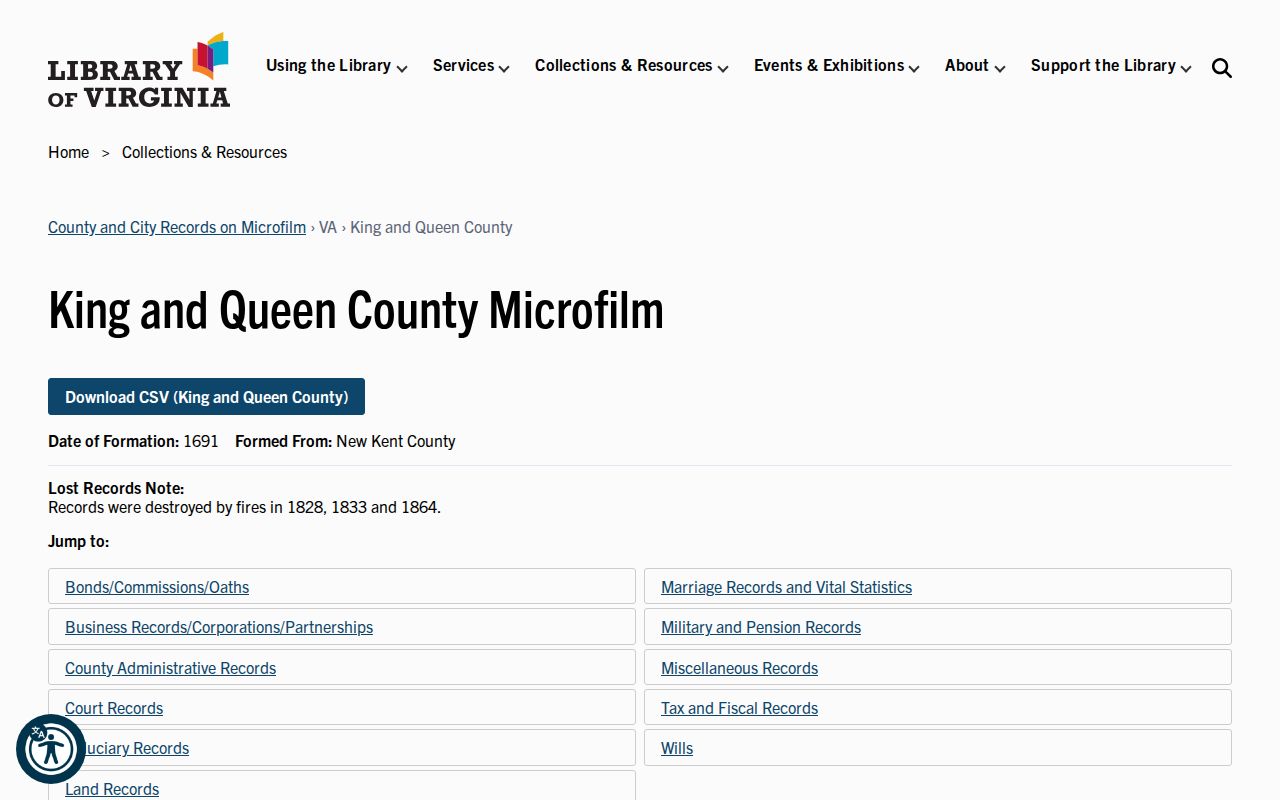
Use the catalog's dates and access notes to choose a record series before requesting historic material.
Former Owners and King and Queen Plats
A former owner's deed may describe a tract by metes and bounds, waterways, adjoining landowners, or a recorded plat reference rather than a modern street address. The Library of Virginia catalog lists an 1822-1881 plat book. It also lists Plat Books 1-3 from 1936-1951, and Plat Book 11 from 1979-1981. These records can explain how a large holding was divided. But the catalog alone cannot prove a particular lot matches today's map. Compare the deed's boundary calls with the plat and the current GPIN. Check the named neighbors and the book-and-page reference too. Record each uncertainty. A GIS outline helps orient a reader. The signed deed and recorded plat still control the documentary trail. Is the referenced book not digitized? Then ask the Clerk which plat volume holds the referenced instrument.
King and Queen Former Owner Land Books
Land books offer a year-by-year window on a tract. When a deed is missing or a parcel's tax identity shifted, they can show the taxable owner of record. They also list the acreage, and the assessed land tied to a name. Treat each entry carefully, though. A land-book line is not a conveyance. So it cannot prove legal ownership on its own. Confirm the person and tract through the deed, its description, and neighboring evidence. Do that before drawing conclusions.
King and Queen County's 1904 Land Book shows up in a 2023 preservation-award listing. That is a preservation reference only. It does not mean the volume is digitized or searchable online. Ask the Clerk or an archival catalog where the book is held. Ask also whether the year you need can be inspected or copied.
Walk the King and Queen Deed Chain
Begin with the parcel as it exists today. Pull the latest recorded deed. Note the grantee who acquired the tract and the grantor who conveyed it. Then search that grantor as an earlier grantee to reach the next link back. Move one recorded transfer at a time. Along the way, keep a worksheet. List the instrument date, recording date, parties, deed book and page or instrument number, legal description, and the source you consulted. That discipline turns a loose name search into a traceable former-owner sequence. It also makes a gap, a same-name mix-up, or a parcel split far easier to spot.
- Locate the most recent deed with the present owner listed as grantee, using the parcel card to confirm the GPIN and legal description.
- Read the deed image and note the grantor, recording reference, consideration if stated, and legal description.
- Search the prior grantor as a grantee, then inspect the earlier deed to identify the preceding owner.
- Repeat until the index run or surviving records end; switch to the relevant book or archival catalog when the year falls outside the online range.
- Grantor / grantee
- The party conveying an interest and the party receiving it, respectively, as named in an instrument.
- Chain of title
- The sequence of recorded instruments used to trace a property interest from one owner to an earlier owner.
- Legal description
- The land description in the instrument; historic research often depends on it more than a modern mailing address.
King and Queen Former Owner Record Access
The Circuit Clerk links Virginia Secure Remote Access for land records and takes counter inquiries at the courthouse. The published office address is 234 Allen's Circle, P.O. Box 67, King and Queen Court House, VA 23085-0067; telephone (804) 785-5984; hours are 8:30 a.m. to 4:30 p.m. Confirm current procedures before you travel or order anything. The county publishes no current copy, certification, or remote-subscription prices, so ask about the fee and the precise book, page, or instrument tied to the parcel you need.
OCRA/CIS is a separate circuit-court route for case information and imaging. It can help when an ownership change also involved a recorded court proceeding. Still, do not mistake a case image for the land instrument that transfers the parcel.
Virginia Secure Remote Access is the statewide remote entry point linked by the local Clerk.
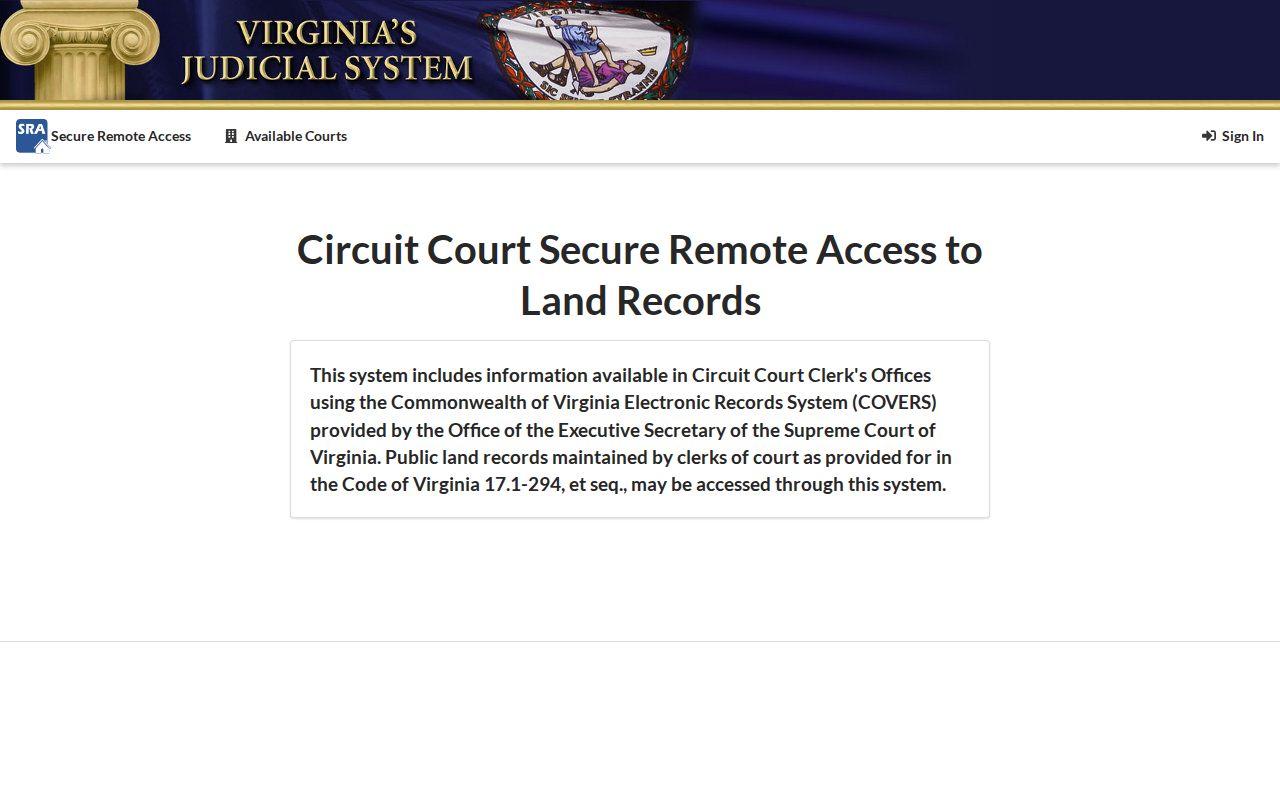
The remote landing screen marks the access route. Check its current account and fee terms before relying on it for deed records or a parcel lookup.
King and Queen Oyster Ownership Records
King and Queen's historic holdings reach beyond familiar land instruments. The collection includes oyster plats and inspectors' reports. First figure out what the old reference points to. It may be the upland parcel, a plat, or an inspection record. A water-related document can describe a use or a boundary. But it does not act as a modern deed to the adjoining land. Keep the record types distinct. Ask the Clerk or archival catalog where each series is held.
This angle serves house and family history on the Middle Peninsula well. Older records may describe a tract by its creek, landing, or oyster ground. Compare those names and dates against the deed chain. Never assume that a person named in an inspection report owned every nearby parcel.
Limits of King and Queen Owner History
A former-owner sequence holds only as far as the surviving instruments and descriptions carry it. Fires in 1828, 1833, and 1864 destroyed earlier county records. The Clerk's stated deed coverage begins in 1864. Reaching further back may take colonial grants, archival sources, court files, land books, or other records outside the deed series. Availability for a given parcel must be confirmed. A street address may also postdate the oldest records. Match a historic tract by its legal description and map reference instead.
Lawful use. Former-owner research is appropriate for house history, title work, and property diligence. Keep the inquiry focused on the parcel and its recorded history; do not use names or records to track, intimidate, or harass a living person.